mark: A photo of Mark kneeling on top of the Taal Volcano in the Philippines. It was a long hike. (Default)
[staff profile] mark posting in [site community profile] dw_maintenance

Happy Saturday!

I'm going to be doing a little maintenance today. It will likely cause a tiny interruption of service (specifically for www.dreamwidth.org) on the order of 2-3 minutes while some settings propagate. If you're on a journal page, that should still work throughout!

If it doesn't work, the rollback plan is pretty quick, I'm just toggling a setting on how traffic gets to the site. I'll update this post if something goes wrong, but don't anticipate any interruption to be longer than 10 minutes even in a rollback situation.

koel

Mar. 13th, 2026 07:23 am
prettygoodword: text: words are sexy (Default)
[personal profile] prettygoodword
koel (KOH-uhl) - n., any of several long-tail cuckoos (genus Eudynamys) of south-and-southeast Asia, the East Indies, and Australia.


koel is looking at you
Thanks, WikiMedia!

Exact taxonomy is still under debate, but call it a handful of species with numerous subspecies. Like other cuckoos, they are parasitic, laying eggs in the nests of other birds to be raised by them. The name is from Hindi koyal, from Sanskrit kokila, after the bird's call.

---L.

New Worlds: Miscellaneous Arts

Mar. 13th, 2026 08:12 am
swan_tower: (Default)
[personal profile] swan_tower
Throughout the art sections of this Patreon, I've been grouping them into broad categories: visual arts, performing arts, literary arts, and so forth. But what about the arts that are kinda of . . . none of the above?

It's a trick question, honestly, because just about everything can be classed under one of those categories. But I do want to take a moment to talk about a variety of arts that, while classifiable as painting or sculpture or what have you, don't normally get included under those headers, because of how they're used or what materials they involve. It's not an exhaustive list, but it will serve as a reminder that our species is as much Homo creatrix as it is Homo sapiens: if we can use it for art, we probably have.

Let's look at the "painting" side of things -- I don't know if there's a good technical term that covers painting, drawing, and anything else involving the creation of images or designs on a two-dimensional surface. Some variations here are about technique, as in the case of frescoes: there you execute your work upon wet plaster, making the pigment far more durable. And those are usually murals, though not always, which differentiates them from both the more portable sort of art and the scale on which the average painter operates; a mural doesn't have to be enormous, but it certainly lends itself to monumental work, far beyond what a canvas could reasonably support.

The question of what is being painted leads us toward some other interesting corners. Illumination, for example, is the art of decorating the pages of books, whether by fancifying the text itself (illuminated capital letters and the like) or by including images alongside. Other people have made art out of painting eggshells -- or carving them, if the shell is thick enough; ostrich eggs are good for this, and one can imagine dragon eggs being the same way -- or the insides of glass balls. Those also frequently involve working at a very tiny scale, and it's worth noting that miniature painting is a whole field of its own, making a virtuoso display out of executing your work at a level where someone might need a magnifying glass to fully appreciate it.

(Er, "miniature painting" in the sense of "very small," not "minis for Dungeons & Dragons or a similar game." Though that's its own popular art form, too!)

In other cases, it's the medium of the decoration itself that becomes unusual. I've mentioned mosaics before, tessellating colored stones, ceramic, or glass to make an image, but you can grind even smaller than that with sandpainting. This doesn't always involve actual sand -- sometimes it's crushed pigments instead -- and some versions are more like carving in that they involve drawing in a sandy surface, but most specifically this involves pouring out sand or powder to create your designs. As you can imagine, this tends to be an ephemeral art . . . but that's often the point, especially when it's used in a ritual, religious context.

Some of these arts start rising above the two-dimensional surface in interesting ways. Beading can, when done thickly enough, become almost sculptural; it's also massively labor-intensive, which is why it became popular for sartorial displays of wealth when industrialization made the production and dying of fabric much cheaper. Quillwork is a form of fabric decoration unique to Indigenous North America, using dyed and undyed porcupine quills to create designs; among the Cheyenne, joining the elite Quilling Society that crafted such things was itself a form of status. This is distinct, however, from quilling: a different art with a similar name that curls tiny slips of paper into coils, then glues them to a backing to create images from the coils.

Paper leads us onward toward more overtly sculptural uses of that medium. What is origami, after all, but a specific kind of paper-based sculpture? That one in its strict incarnation prohibits cutting or gluing the paper to create its forms, which puts it at the polar opposite end of the spectrum from papercutting: an art some of us may have tried in simple form as kids, but skilled practitioners can achieve astonishingly complex and beautiful pictures. One particular version of this, the silhouette, is traditionally done with black paper and used especially for portraiture.

Basketry maybe should have gone into the textiles essay, both because many of its techniques are close kin to weaving and sewing, and because it very much belongs among what I termed the "functional arts" -- those which serve a utilitarian purpose while also including an aesthetic dimension. Anything pliable can potentially be used for basketry: most often plant materials like straw, willow, grass, and vines, but also animal hides or modern materials like strips of plastic. The resulting vessels are vitally important as storage containers and can even be made waterproof, especially if they're coated in clay or bitumen, but by working patterns into their design, basket-makers can also make them beautiful.

Or perhaps you go in an entirely non-utilitarian direction. Flower arranging is about taking nature's beauty -- perhaps from a garden -- and displaying it in an artificial way, knowing full well that soon the flowers will wilt. But where most of us stop at just sticking a few blooms in a vase, some artists go on to create full-blown sculptures of flowers and greenery, sometimes with complex internal structures that continue supplying water to the blooms to extend their life. There was even a competitive TV show about this, The Big Flower Fight!

I could keep going, of course. Baking is a functional art insofar as it makes something for you to eat, but it definitely has its elaborate end where the artistic value of the decoration or shaping is as much the point as the taste of the final product -- if it's edible at all, which it may not be! Amaury Guichon has made an entire TikTok phenomenon out of showcasing his monumental chocolate sculptures. I'm sure someone out there has devoted their life to the art of meat sculpture, but I'm not going to go looking for evidence of that. The point is made: if we can turn it into art, we probably will.

Which is honestly kind of amazing. Art is, after all, about doing more than the minimum required for our survival. It is a mark of our success as a species, that we have freed enough of our time from the work of acquiring food and shelter that art is possible. And it says something about our inner state, that when we have a spare moment available, we often want to spend it making something beautiful -- out of whatever comes to hand.

Patreon banner saying "This post is brought to you by my imaginative backers at Patreon. To join their ranks, click here!"

(originally posted at Swan Tower: https://is.gd/ANFkiL)
mrissa: (Default)
[personal profile] mrissa
 

Review copy provided by the publisher.

This is such a fresh and vivid fantasy, it is achingly sad and exciting and wry by turns. I am so glad I got to read this. It tangles two timelines, the "past" of the 1940s and the "present" of the 1970s, both in Hong Kong's Kowloon Walled City slum and then reaching out to the areas around it. Mercy Chan doesn't have any memories when she washes up on the shores of Hong Kong during the Japanese occupation--a terrible time to be friendless and unprotected. But she isn't quite either thing, because she has Bao, her maogui (cat ghost)--not a type of spirit known to be friendly, but Bao has apparently made an exception for Mercy.

Bao won't be the last of the local ghosts, spirits, and gods we meet in the course of this book (although he is my favorite). Mercy's talent at communicating with ghosts has given her steady work with the triads for decades. Now her past is catching up to her, and if she can't remember what it was, her future looks imperiled--and so does the future of Hong Kong itself. This is a book that seeks kindness in a world that doesn't always think it has room to be kind, and I found it to be a very satisfying read indeed.

She's got a common full of love

Mar. 12th, 2026 05:11 pm
sovay: (Viktor & Mordecai)
[personal profile] sovay
It is the dozenth birthday of Hestia Hermia Linsky-Noyes, lhude sing meaw! We sang to her after midnight. She ate eagerly of her festive ham. She has spent the afternoon in the pursuit of Bird Theater. I remember her brother under that same light. Bast smiled when our cats were born.

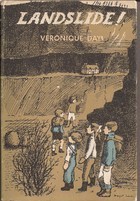
Landslide, by Veronique Day

Mar. 12th, 2026 12:59 pm
rachelmanija: (Books: old)
[personal profile] rachelmanija


A French children's book in translation from 1961, in which five children are trapped in a cottage by a landslide.

14-year-old Laurent's family is concerned that he spends all his time reading and doing chemistry experiments, and isn't engaging with other people. So they dispatch him to stay with his younger brother and sister in a cottage only occupied by a 14-year-old girl and her younger brother, who are alone because her mother is having surgery. The idea is that Laurent will have to take care of the other kids, and this will make him come out of his shell more. His parents do leave him the out of being able to pack up his siblings and return to Paris if he really hates it.

I am honestly not sure if it was even vaguely normal in 60s France for five kids ages 14-5 to stay alone in a remote mountain cottage for ten days, or if this was just a literary convention. Anyway, Laurent unsurprisingly hates it and packs up his siblings to leave. But while they're on the train platform with the other kids, he has a change of heart and they all head back to the cottage. But they stop in the cottage of a family friend, who is out at the time.

It gets buried in a landslide! They're all trapped in pitch darkness! In an only vaguely familiar house! They can't use the stove because it already nearly suffocated them with carbon monoxide! Their only air is from a narrow shaft leading to a giant canyon! There's very little food! No one knows they're in trouble because one of the kids wrote ten postcards dated for every day of the vacation, then arranged with the post office to send one per day!

The kids having to do everything in total darkness for most of the book is a really cool twist on this sort of "trapped in a space" book. (One of my favorite moments is when enough dirt slides away that some light gets in, and they see that they've been half-starved in pitch darkness with two huge hams and a lantern hanging from the ceiling.) It has some cozy elements - they're trapped with goats, which they can milk but which also get into everything and poop everywhere, and one goat gives birth to twin kids - but gets desperate quickly when Laurent gets an infected cut and the main milking goat drowns in a flooded cellar. But it all ends up okay when they first signal with Morse code in a mirror (in a nice touch of realism, it takes a long time for anyone to figure out the message as the kids get some of the letters wrong, including signaling OSO instead of SOS) and then make and set off gunpowder!

Not an enduring classic, but an entertaining read.

di(a)glossia

Mar. 12th, 2026 07:16 am
prettygoodword: text: words are sexy (Default)
[personal profile] prettygoodword
diglossia (dai-GLOS-ee-uh) or diaglossia (dee-uh-GLOS-ee-uh) - (ling.) n., the use of two varieties of the same language in different social contexts of a speech community.


Typically, one is a high/prestigious mode and the other a low/everyday mode. A common example is High German and Swiss German, common throughout German-speaking Switzerland, but many countries where there's an official version used in schools and broadcasts (often based on the dialect of the capital) and local variants have this (outside the capital, that is). As a linguistics term, introduced in 1959 by American sociolinguist Charles A. Ferguson from Latin diglōssia, bilingual (with influence of French diglossie, bilingual), from Ancient Greek díglōssos, again same meaning.

---L.
mrissa: (Default)
[personal profile] mrissa
(This silly site would not let me fit both of their whole names in the title. It's Jo Walton and Ada Palmer.) 

Review copy provided by the publisher. Also I've been friends with both authors for a good long while.

Which makes this a very weird book for me to read, honestly, because I met both Jo and Ada through SFF fandom and conventions, through all writing and talking and thinking about genres, and so a lot of the first third of this book is, for me, "the obvious stuff people talk about all the time." Well, sure. Because Jo and Ada are people, and I am around them talking about this kind of thing all the time (or at least intermittently for more than twenty years in one case and more than fifteen in the other, so it adds up), so naturally their points of view on genre theory are in the general category of "stuff I would logically have been exposed to by now." It's a bit "Hamlet is just a string of famous quotes strung together," as reactions go: kind of the cart before the horse. And it means that there are a few things that are in the category of "oh right, there's the thing I always disagree with Jo about; look, she still has her own idea about it rather than mine, go figure." This is to be expected given the long and winding discussion it's been, but it makes it a bit harder for me to say useful things about what it will look like to most readers.

So the first third of the book is the part that most obviously fits the title--it's the section that has the largest-scale thoughts about the nature of genre qua genre. The second third was the most satisfying to me: it was thoughts on disability and pain. I think a too-casual reader might mistake it for random padding to make this book book-length without requiring Jo and/or Ada (some of the sections are co-written and some are written solo by each author) to write more entirely new material. But no. Absolutely not. The way that Jo and Ada process disability is strongly shaped by each of their perspectives as SFF writers and readers, and the way they process SFF is--sometimes subtly, sometimes overtly--shaped by their lived experiences as disabled people. Some of our personal stories are about the project of science fiction and fantasy. Jo's and Ada's are. And they're useful--powerful--to see on the page like this. This is where knowing people for a quite long time doesn't give me a "yes I have already been here" reaction, because three disabled friends do not talk about disability and personal history and its place in the speculative project in the same way as two of them would write about it for a general audience. It's a view from a very different angle, which is great to have. The last section is more miscellany, still related to the title but more specifics, less sweeping theory. It's labeled craft, and this is true, but in a broad sense--there are pieces about The Princess Bride and optimism and censorship as well as about protagonists and empathy in a structural sense.

I wonder if people who come to this book from reading mostly Ada rather than both but by the numbers more Jo would see how Jo has influenced Ada's prose voice in the joint pieces. For me, the stylistic commonalities with Inventing the Renaissance were really striking, but if you'd come directly from reading that I wonder how much you'd be saying, oh, that's got to be Jo Walton because it's not really what I'm used to from Ada Palmer solo! Co-authorship is an interesting beast, and I feel like there's a difficult balance here that's partially achieved by having pieces by each person solo as well as the two together. I'm not sure I can immediately come up with another thing like it that way.

rachelmanija: (Books: old)
[personal profile] rachelmanija


Gyre explores the tunnels of an alien world in a mechanical suit, her only connection to the outside world the voice of Em, her handler who she’s never met, who may or may not have her welfare in mind, and who definitely has boundary issues.

Gyre has less experience caving than she claimed, and caving is extremely difficult. There are sandworm-like creatures called Tunnelers that will kill multiple parties of cavers for unknown reasons, so cavers go in alone, unable to take off their suit for weeks on end, with their handler as their only link with the outside world. Em can literally take control of Gyre’s suit/body, can inject her with drugs, etc - and not only has little compunction about doing so, but won't tell Gyre what the actual purpose of the mission is.

Spoilers! Read more... )

This is a type of story I don’t see very often, in which there’s one main science fiction element – in this case, the mechanical caving suit – which is explored in depth and is essential to the story, and it’s also set on a (very lightly sketched-in) other planet. Generally the “one science fiction element” stories are set on Earth. Apart from the Tunnelers, this novel actually could take place on an Earth where the suit exists.

The Luminous Dead, like The Starving Saints, has a small cast of sapphic women and takes place almost entirely in the same claustrophobic space; if it was on TV, we’d call it a bottle episode. I normally like that sort of thing but unlike The Starving Saints, it outstays its welcome. It has about a novella’s worth of story, and while it’s very atmospheric and any given portion is well-written and interesting, considered alone, as a whole it’s very repetitive and over-long. I would mostly recommend it if you like complicated lesbians with bad boundaries.

If I were you, I'd be out on the town

Mar. 11th, 2026 06:27 pm
sovay: (Mr Palfrey: a prissy bastard)
[personal profile] sovay
Whatever passes for my health these days has tipped over onto the sidewalk, but my afternoon which contained far too much communication with doctors on far too little sleep was measurably improved by the discovery of Avalon Emerson's "Don't Be Seen with Me" (2025). I think of Oppenheimer Analysis as so extremely niche in appeal that it almost never crossed my mind that anyone would cover one of their songs, much less drench it in heart-racing, echo-dragged dream-pop like a night drive high on the endless windshield slide of light. I still prefer the colder, dryer original with its relentlessly weird garbage-can drum programming and glitteringly nervy columns of synths against which the vocals sound even more paranoid and plaintive, but just the fact that someone else went for their own version makes me happy. I suppose electronically unsettled meditations on the Manhattan Project and the Cold War have come back around into fashion.
swan_tower: (natural history)
[personal profile] swan_tower
I was busy enough yesterday that this went out on Bluesky, but not yet here on my own site!

I am teaming up again with Avery Liell-Kok (one of the artists from the pattern deck) to make Lady Trent's Field Journal: A Dragon Coloring Book. Ten images of dragons in the wild, accompanied by excerpts from Lady Trent's scholarly writings -- my way of answering a question I've gotten with surprising frequency, which is "Will you ever publish any of her scientific work?" I have yet to come up with any complete ideas in that regard that would be interesting enough to pass as a short story, but as pairings for her drawings from the field? Sure!

The dragons featured here are a deliberate mix of old favorites you've seen before, dragons which got mentioned but never depicted, and new beasts created entirely for this project. The Kickstarter campaign will offer the writings and images in three formats: a file pack you can print at home or color in digitally, a loose-leaf pack to facilitate sharing around or hanging on the wall, and a paperback book -- that last coming in both a regular and a Scholar's Edition, which will be signed and have an additional quick sketch from Avery. I'm also including add-ons for bookplates and signed paperbacks of the novels in the series!

Right now we're in the pre-launch phase. If you'd like to be notified when it goes live (or you just want to support the project in the eyes of the algorithm gods), just click the "notify me" button here. It won't be long!

(originally posted at Swan Tower: https://is.gd/ww1BN4)

calque

Mar. 11th, 2026 07:37 am
prettygoodword: text: words are sexy (Default)
[personal profile] prettygoodword
calque (KALK) - n., a borrowing from one language to another where the semantic components of the original term are literally translated into their equivalents in the borrowing language, also called loan translation.


The canonical example is German Übermensch was calqued into English by separately translating über- as super and Mensch as man, resulting in superman. English is not the only language that does this -- skyscraper has been calqued piecewise into many other languages. From French, from calquer, to copy, from Italian calcare, to trace over/tread, from Latin calcāre, to tread/trample.

---L.
sovay: (Sovay: David Owen)
[personal profile] sovay
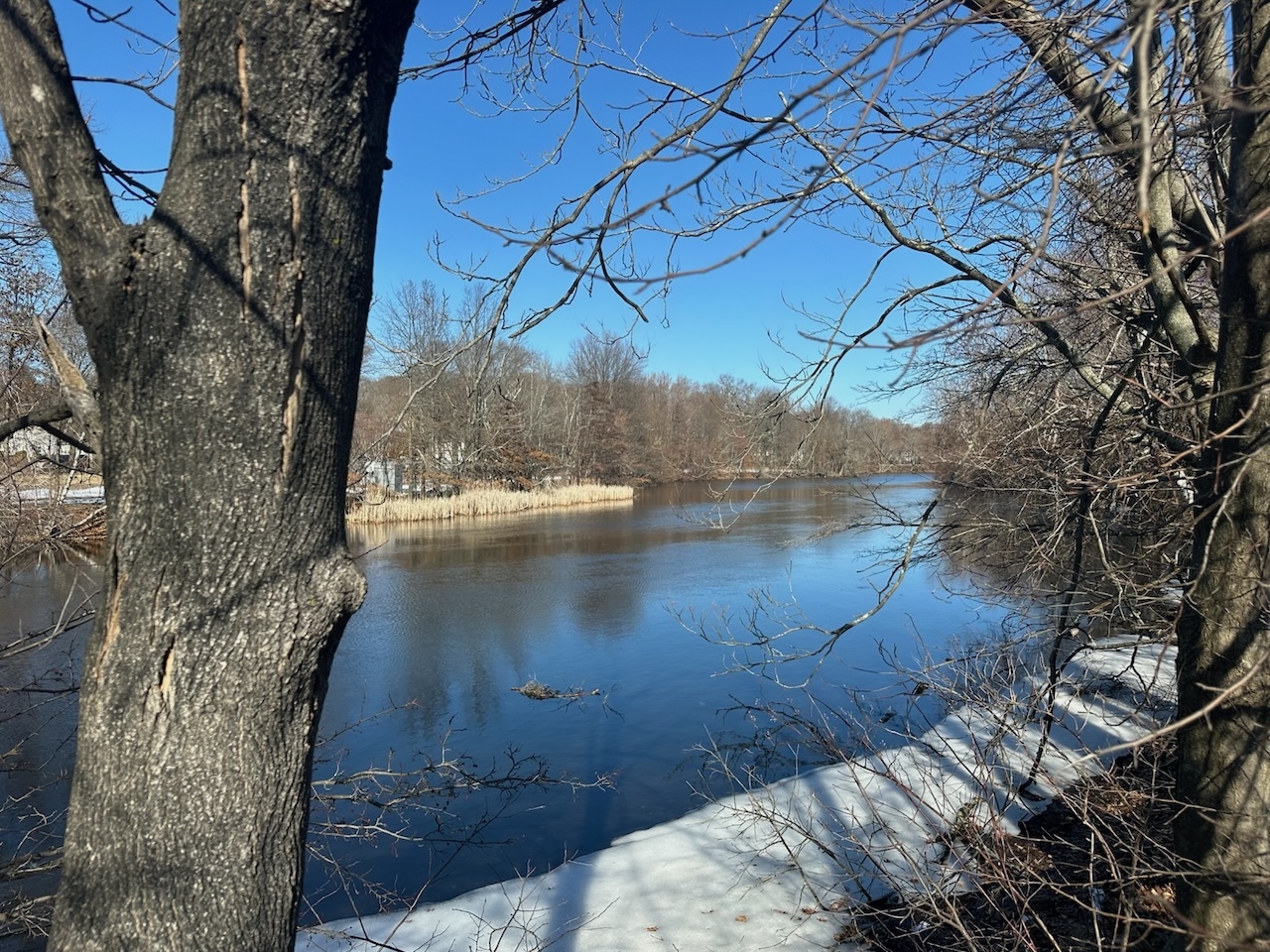
Not only is 42 °N a lousy latitude for radio astronomy, it does jack most of the year for the photosynthesis of vitamin D, but I was inspired by the summerlike spike in temperatures to walk out for groceries in a T-shirt and whatever it may or may not have done for my metabolism, it was worth the pitching over onto the couch when I got home.


No introduction to an actor may be as misleading as discovering Peter Lorre with Arsenic and Old Lace (1944), but spending much of last night sacked out in front of my longtime comfort movie of Robert Aldrich's The Flight of the Phoenix (1965) reminded me that I should probably count Richard Attenborough in a similar vein, all those weak links and bad influences his panicking debut in In Which We Serve (1942) and his nihilistic breakout in Brighton Rock (1947) set him up for. Never mind that I saw him first as the briskly competent ringleader of The Great Escape (1963), he looks much more in his ambivalent element as Lew Moran, the middle-aged navigator who may have his moral compass screwed on straightest of the sun-blistered survivors of what will become the Phoenix but little authority between his uneasy position as peacemaker and his diffidence as a drying-out drunk, even if his stammer doesn't after all stop him from going off like a firecracker on some blatantly bullheaded display of stupidity on the part of one or more of his co-leads. It would have been the second way I saw him, after which the time-shock of Jurassic Park (1993), jovial and grandfatherly and scientifically short-sighted. I'd give a lot for a record of his Sergeant Trotter in the original run of The Mousetrap. The time machine bureau is going to cut me off.

bohunk

Mar. 10th, 2026 07:29 am
prettygoodword: text: words are sexy (Default)
[personal profile] prettygoodword
bohunk (BOH-huhngk) - (N.Am.) (ethnic slur) n., a person from east-central Europe, especially a laborer.


Like most ethnic slurs, this is disparaging and offensive. That said, I don't know how common it is today, given I only recently learned of it, in a story written in the 1920s. Dates to around 1900, formed by combining Bo(hemian)* + Hung(arian), so originally specifically central Europe, but it soon was applied to Slavic immigrants from lands east of there. (The ethnic slur hunky, used of Slavic coal miners in the Appalachian region, is related only in the sense that it's also clipped from Hungarian.)

* The western half of what's now Czechia.

---L.

Sit and watch my TV set

Mar. 9th, 2026 08:00 pm
sovay: (Silver: against blue)
[personal profile] sovay
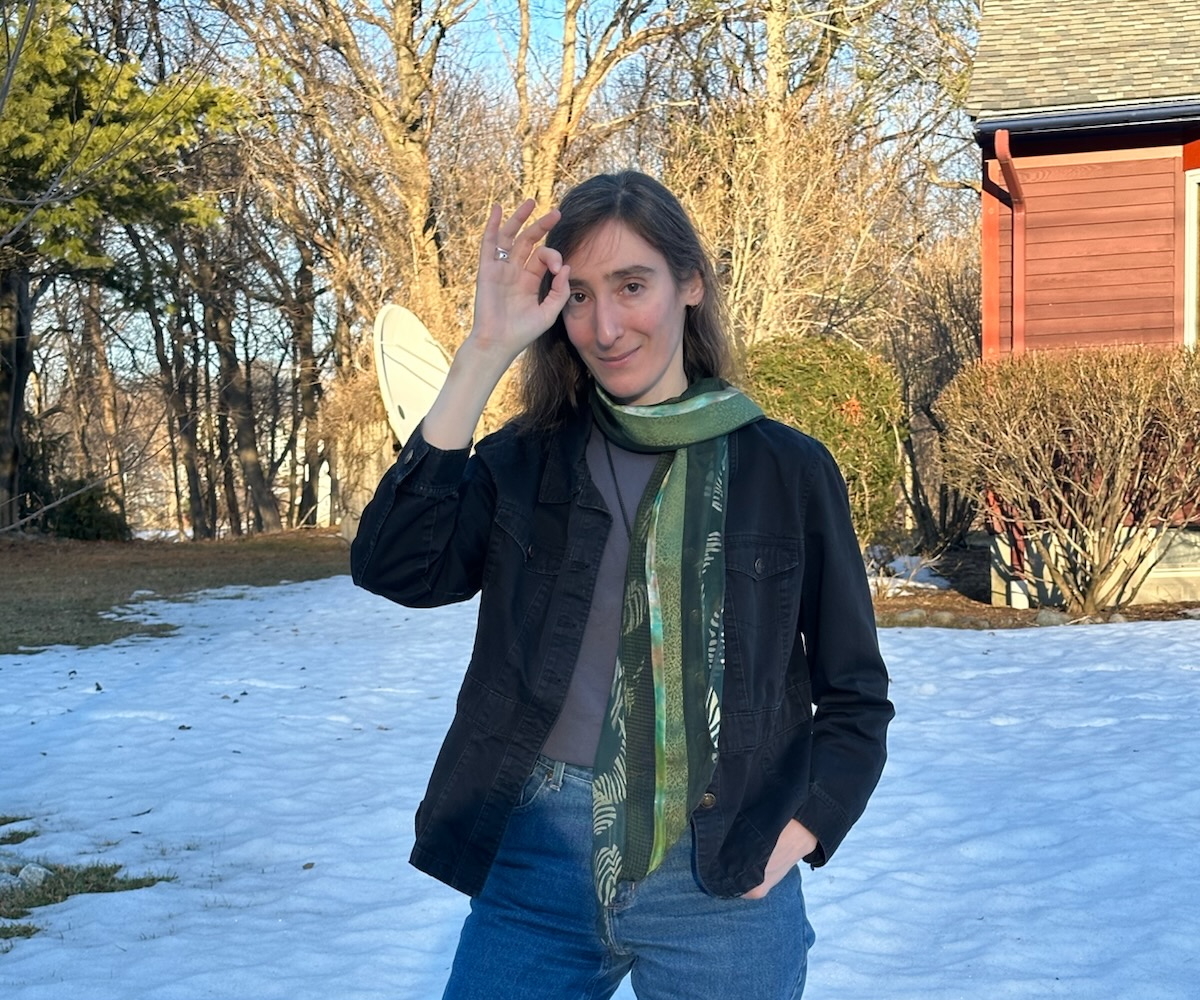
I have been made the unexpected recipient of an unbirthday scarf. It is patterned as if with fossil leaves and irresistibly striped.

stercoration

Mar. 9th, 2026 08:08 am
prettygoodword: text: words are sexy (Default)
[personal profile] prettygoodword
stercoration (stir-koh-RAY-shuhn) - (obs.) n., the act of manuring (ground) with dung.


That is, fertilizing with shit. Dates to 1605 and generally rare, but odd enough it still shows up every so often -- taken from Latin stercoratio, from stercorare, which meant both to add manure and to clean manure out (of e.g. a horse's stall).

---L.
sovay: (Sydney Carton)
[personal profile] sovay
For various reasons not limited to the overhead activity of children in the mornings, last night was the first real time all week that I slept and have thus spent most of the day in a vague state of hibernation despite the warmth of the air. There was a mauve overcast around sunset that turned out to belong to a volcanic wall of gold and bougainvillea over an agate-blue cloud-band. Have some mostly musical links.

For the more than twenty years since [personal profile] lesser_celery made me a CD of Peter Gabriel's Melt (1980), I have assumed that the eerily voiced French refrain of "Games Without Frontiers" was either the singer's own falsetto or pitch-shifted vocals. It turns out to be Kate Bush. I would never have identified her on my own, but then I thought about "Army Dreamers" (1980).

I grew up on Arlo Guthrie, but my favorite version of "City of New Orleans" (1971) is almost certainly Steve Goodman himself in 1970, where he reminded me unexpectedly of a Chicago-accented Stan Rogers. It's driving me nuts that I would swear the first person I heard lead "The Twentieth Century Is Almost Over" (1977) was Pete Seeger and I can't figure out where.

WERS has been playing nothing but female artists for International Women's Day, which means everything from Chaka Khan's "I'm Every Woman" (1978), Katrina and the Waves' "Walking on Sunshine" (1983), and Bikini Kill's "Rebel Girl" (1993) to Tegan and Sara's "I'll Be Back Someday" (2019), Orla Gartland's "Little Chaos" (2024), and Arlo Parks' "2SIDED" (2026). I had a moral obligation to let my father know when Rickie Lee Jones came around.

Video quality regardless, [personal profile] sholio's "Waking Up in Vegas" (The Greatest American Hero) remains one of my all-time favorites of their vids.

Keep mending broken lines

Mar. 7th, 2026 09:33 pm
sovay: (Lord Peter Wimsey: passion)
[personal profile] sovay
For her eightieth birthday observed, we celebrated my mother with a three-tier almond cake layered with marzipan icing and raspberry and rose hip preserves, frosted in rose-toned whipped cream, and decorated with pâtes de fruits into the central one of which was socketed the candle to grow on. It looked like a charlotte russe from the Geometric period in slices. We gave her books, cards, balloons, a banner of cats, a pendant like a bronze-pronged sun of creamy golden sapphire on a leather cord. My niece ran around all day with the twins. I am not ready for Daylight Saving Time. I have enough trouble with the regular kind.

Registration is open

Mar. 7th, 2026 06:30 pm
boxofdelights: (Default)
[personal profile] boxofdelights posting in [community profile] wiscon
Registration for WisCon Online 2026 is Open.

Welcome to the oldest feminist inclusive convention held Memorial Day Weekend, May 21-25, 2026.

https://reg.wiscon.net/

Sign up for the newsletter here, if you haven't already!
https://wiscon.net/news/e-newsletter/

New Worlds: Gardens and Parks

Mar. 6th, 2026 09:04 am
swan_tower: (Default)
[personal profile] swan_tower
I've been trying for some time now to get a landscaper not to ghost me, so we can redo the front and back yards of my house.

Am I trying to hire a contractor, or an artist?

Yes. Both. Year Nine's discussion of how we've reshaped the land focused entirely on utilitarian aspects: draining wetlands, filling in shorelines, flattening land for agriculture and roads. We entirely skipped over the aesthetic angle -- but that matters, too! The land and what grows atop it can become a medium for art.

A fairly elite art, though. At its core, landscaping for the purpose of a garden or a park is about setting aside ground that could have been productive and using it for pleasure instead. Not to say that there can't be some overlap; vegetable gardens can be attractive, and parks might play home to game animals that will later grace the dinner table. But there's a sort of conspicuous consumption in saying, not only do I have land, but I have enough of it to devote some to aesthetic enjoyment over survival.

We don't know what the earliest gardens were like, but we know they've been with us probably about as long as stratified society has been, if not longer. The Hanging Gardens of Babylon (named for their tiered structure) were one of the Seven Wonders of the Ancient World, and those -- if they ever existed -- were a continuation of a well-documented Assyrian tradition of royal gardens, which included hydraulic engineering to supply them with water. So this was not a new art.

But when did it become an art? I'm not entirely sure. The boundary is fuzzy, of course; gardens can exist without being included in the discourse around Proper Art. (As we saw in Year Eight, with the shift toward recognizing textiles as a possible form of fine art.) Europe didn't really elevate gardens to that stature until the sixteenth century, as part of the Renaissance return to classical ideals. The earliest Chinese book I've been able to find on the aesthetics of gardening, as opposed to botanical studies of plants, is from the seventeenth century, but it wouldn't surprise me if there were earlier works. I think that when you start getting specific aesthetic movements and individual designers famous for their work, you're in the realm of Art instead of a functional thing that can also be pretty; I just don't know when that began.

There definitely are aesthetic movements, though! In particular, gardens-as-art swing between the poles of "nature in her most idealized form" and "intentionally artificial." Many Japanese gardens exemplify the former, while European gardens laid out in complex geometric beds demonstrate the latter. It's not entirely a regional differentiation, though; Japanese dry ("Zen") gardens, with their carefully raked seas of gravel, are obviously not trying to look natural, and Europeans have enjoyed a good meadow-style garden, too.

This is partly a question of how you're supposed to interact with these spaces. Some -- including many of those Japanese examples, dry or otherwise -- are meant to be viewed from the outside, e.g. while sitting on a veranda or looking down on it from an upstairs window. Others are meant to be walked through, so they're designed with an eye toward what new images will greet you as you follow a path or come round a corner. Meanwhile, hedge mazes may purposefully try to confuse you, which means they benefit from walls of greenery as close to identical as you can get them -- until you arrive at the center or some other node, where the intentional monotony breaks.

In pursuit of these effects, a garden can incorporate other forms of art and technology. Hydraulics may play a role not only in irrigating the garden, but in fueling fountains, waterfalls, artificial streams, and the like, which in turn may host fish, turtles, and other inhabitants. Architecture provides bridges over wet or dry courses and structures like walls, gazebos, arches, arbors, bowers, pergolas, and trellises, often supporting climbing plants. Statuary very commonly appears in pleasing spots; paintings are less common, since the weather will damage them faster, but mosaics work very well.

But the centerpiece is usually the plants themselves. As with zoos (Year Four) and the "cabinet of curiosities"-style museums (Year Nine), one purpose of a garden may be to show off plants and trees from far-distant lands, delighting the eye and possibly the nose with unfamiliar wonders. The earliest greenhouses seem to have been built to grow vegetables out of season, but later ones saw great use for cultivating tropical plants far outside their usual climes -- especially once we figured out how to heat them reliably, circa the seventeenth century. In other cases, the appeal comes from carefully pruning the plants to a desired shape, whether that's arching gracefully over a path or full-on sculpture into the shapes of animals or mythological figures.

One particularly clever trick involves accounting for the changing conditions inherent to an art based in nature. Many gardens go dead and boring in the winter -- or in the summer, if you're in a climate where rain only comes in the winter -- but a skilled designer can create a "four seasons" garden that offers shifting sources of interest throughout the year. Similarly, they may use a combination of artificial lighting and night-blooming flowers to create a space whose experience is very different at night than during the day.

And gardens can even serve an intellectual purpose! Like a museum, its displays may be educational; you see this in botanical gardens and arboreta, with their signs identifying plants and perhaps telling you something about them. Many scholars over the centuries have also used gardens as the site of their experiments, studying their materials and tweaking how to best care for them. But this doesn't stop with plain science, either. We often refer to dry rock gardens as "Zen gardens" because of their role in encouraging meditative contemplation, and actually, it goes deeper than that: the design of such a garden is often steeped in symbolism, with rocks representing mountains in general or specific important peaks. I don't actually know, but I readily assume, that somebody in early modern Europe probably created a garden full of coded alchemical references. The design of the place can be as much a tool for the mind as it is a pleasure for the senses.

Which brings them back around to a functional purpose, I suppose. Gardens very much straddle the line between aesthetics and pragmatism!

Patreon banner saying "This post is brought to you by my imaginative backers at Patreon. To join their ranks, click here!"

(originally posted at Swan Tower: https://is.gd/O7UpKN)
Page generated Mar. 14th, 2026 11:39 pm
Powered by Dreamwidth Studios